
Concrete Calculator.
Estimate cubic yards for your pour. For final ordering, contact dispatch — we'll factor in mix design, waste, and Alaska delivery logistics.
Estimates only. Mix design, slump, reinforcement, and site conditions affect actual quantity. Dispatch will confirm final order.
Understanding the Math.
Slabs & Footings
For standard horizontal pours, the calculator multiplies your length and width (in feet) by the thickness (in inches, converted to feet). The result is cubic feet, which is then divided by 27 to give you the total cubic yardage required. This is the industry standard calculation for driveways, garage floors, and continuous footings.
Walls
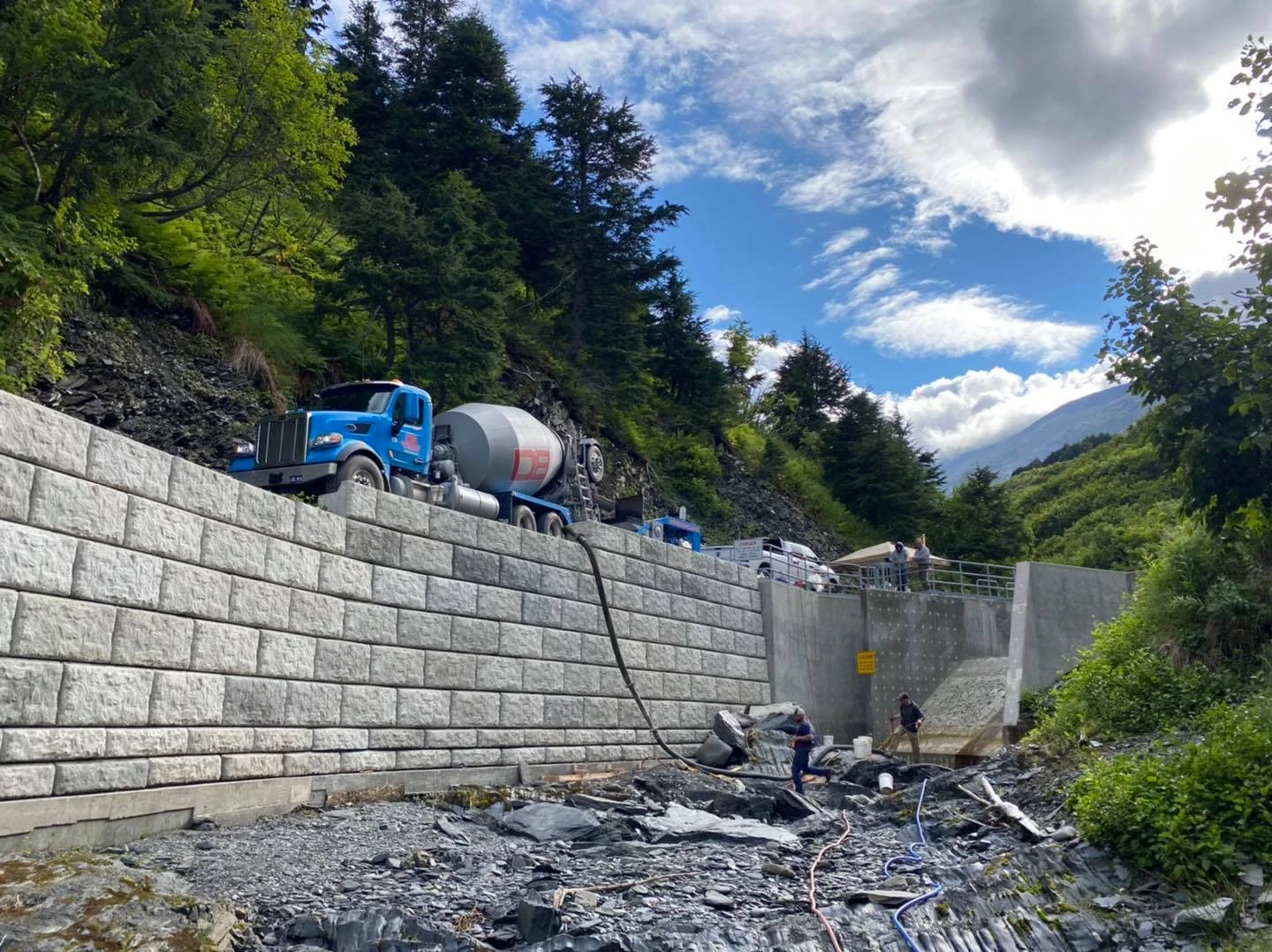
Vertical pours work identically to slabs mathematically, but require you to input length, total wall height, and wall thickness. Keep in mind that tall or complex wall pours may require pump trucks and specific slump ratings to ensure proper consolidation around rebar grids.
Sonotubes & Columns
Cylindrical pours use the formula for the volume of a cylinder (π × r² × h). You input the diameter in inches and the total depth/height in feet. The calculator automatically divides the diameter by 2 to find the radius, converts it to feet, squares it, multiplies by pi and the depth, and finally converts to cubic yards.
The "Waste Factor"
Subgrades are rarely perfectly level, and forms often bow slightly under the immense weight of wet concrete. Some material will also be left in the pump hopper or mixer chute. We strongly recommend leaving the default 10% waste factor intact to prevent running short—ordering a "short load" to finish a job is extremely expensive due to minimum delivery fees and can compromise the structural integrity of your pour by creating cold joints.